
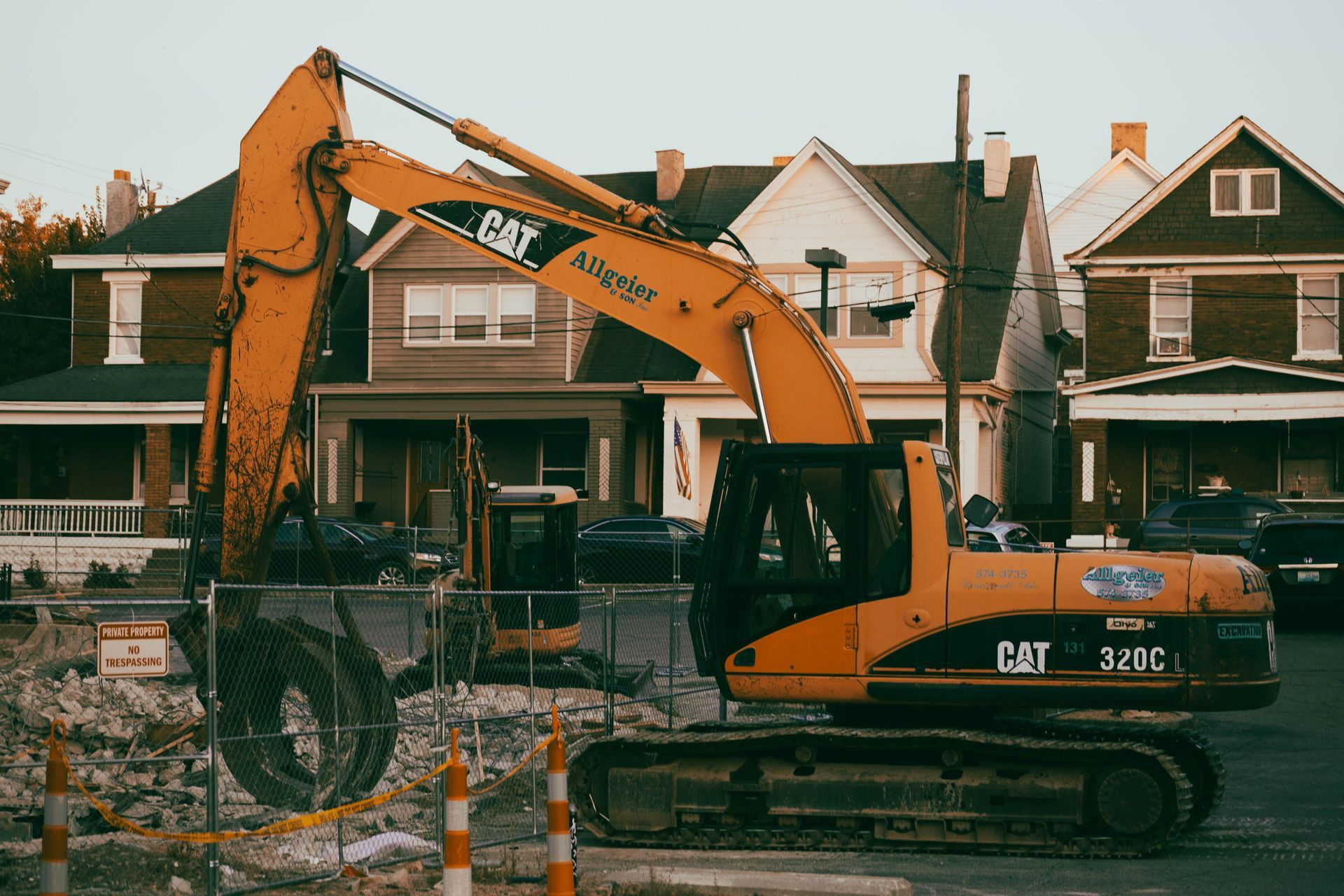
Structures Removed Without Damaging Surrounding Property
Residential Demolition in East Central & Southeast Florida for properties requiring complete or partial tear-down before renovation or rebuilding
Older homes across coastal and inland neighborhoods in East Central and Southeast Florida often require full or partial removal when foundations have shifted beyond repair, structural framing has deteriorated from decades of moisture exposure, or layouts no longer support safe occupancy. Trinity Demolition, LLC handles residential demolition throughout the region, working on single-family homes, multi-family properties, and accessory structures where selective or complete tear-down is necessary. The process involves controlled dismantling, debris separation, and site clearing that leaves the lot ready for the next phase.
Residential demolition begins with utility disconnection verification, followed by systematic removal that starts with interior non-structural elements, then progresses to load-bearing components, and finishes with foundation breakup and grading. The sequence prevents uncontrolled collapse, protects adjacent structures, and allows for material sorting when salvage or recycling is part of the scope. Properties built with concrete block, stucco over wood framing, or pier-and-beam foundations require different equipment and sequencing than slab-on-grade construction.
Schedule a site evaluation to review access requirements and develop a demolition plan specific to your property layout.
What Proper Residential Demolition Requires
The work requires permit coordination, utility clearance documentation, and equipment matched to the structure type and site access. Excavators with shear or grapple attachments handle wall and roof removal, while skid steers move debris to designated staging areas for hauling. Dust suppression and debris containment measures prevent material from migrating to neighboring lots.
Once demolition is complete, you'll see a cleared and graded lot with all structural materials, foundation remnants, and vegetation removed to the specified depth. The surface is level, compacted where required, and free of protruding rebar, concrete fragments, or underground obstructions that would interfere with new construction layout. Utilities are capped at property lines or marked for reconnection.
The scope can include selective interior demolition when only portions of a structure are being removed, foundation removal to a specified depth, or complete site clearing that takes the lot back to bare earth. Septic systems, wells, and underground tanks may require separate handling depending on local environmental regulations.
Questions About How the Work Is Done
Residential demolition raises practical concerns about timing, process, and what remains after the structure is gone. These answers cover how the work unfolds and what property owners should expect.
- What happens before demolition equipment arrives on site? Utilities are disconnected and verified as inactive, permits are secured, and the site is inspected for hazardous materials such as asbestos siding or lead paint that require specialized abatement before general demolition begins.
- How is debris separated during the tear-down? Concrete, metal, and wood are sorted as demolition progresses, allowing recyclable materials to be hauled to separate facilities and reducing the volume sent to landfills, which also affects haul costs and project duration.
- What determines whether a foundation is removed completely or left in place? Building department requirements, the depth of new footings, and whether the existing foundation interferes with grading or drainage plans all influence whether concrete is broken to grade level or excavated entirely.
- Why does demolition sequencing differ for homes with second stories versus single-level structures? Multi-story homes require top-down dismantling to control debris fall and prevent load concentration on lower walls, while single-story structures can often be pulled inward from exterior walls without the same collapse risk.
- What should you look for once the site is cleared? The lot should be free of all structural debris, graded to prevent pooling, and clear of any protruding steel or concrete that would interfere with surveying or excavation for new construction.
Trinity Demolition, LLC works with property owners, contractors, and developers to coordinate demolition timelines with construction schedules and municipal inspection requirements. Contact the company to discuss site-specific access constraints and permitting timelines for your residential demolition project.